- Why Chinese Metaphysics Feels Inaccessible at First
- The Core Framework: Heaven, Earth, and Humanity
- BaZi: Reading the Heaven Pillar
- Feng Shui: Reading the Earth Pillar
- Auspicious Date Selection: Timing the Human Pillar
- The Five Elements: The Grammar of the System
- Gemstones as Elemental Carriers
- How the Disciplines Work Together in Practice
- Where to Begin in 2026
- FAQs
You have probably heard the phrase "Rosetta Stone" used to describe something that makes a complex system suddenly readable. The original stone unlocked an entire civilization's written language. In 2026, more people than ever are searching for something similar when it comes to Traditional Chinese Metaphysics — a way to step into a rich, layered body of ancient knowledge and understand what it actually means for their daily life.
This article is that entry point. Whether you are new to BaZi, curious about Feng Shui, or simply wondering why certain years feel heavier than others, what follows gives you a clear, grounded map of the core disciplines — and how they work together.
Why Chinese Metaphysics Feels Inaccessible at First
The challenge is not that the system is mystical. It is that it is precise. Traditional Chinese Metaphysics is a structured body of knowledge built over thousands of years, with its own terminology, logic, and internal consistency. When you first encounter terms like BaZi, Wu Xing, or San He without context, it can feel like reading an inscription in an unfamiliar script.
The good news is that once you understand the underlying framework, the pieces connect naturally. This is not a random or superstitious system. It is observational, pattern-based, and deeply tied to natural cycles.
The Core Framework: Heaven, Earth, and Humanity
Traditional Chinese Metaphysics rests on a three-tier model known as the Three Realms, or San Cai: Heaven, Earth, and Humanity.
- Heaven refers to the timing of your life — the energies present at the moment of your birth and how they shift across different periods.
- Earth refers to your environment — the physical spaces you occupy and how their energy either supports or drains you.
- Humanity refers to your choices — the actions you take in response to both timing and environment.
No single factor dominates. The system recognizes that you are shaped by all three, and that working with all three gives you the clearest picture of where you stand and where you are headed.
BaZi: Reading the Heaven Pillar

BaZi, also known as the Four Pillars of Destiny, is the discipline focused on the Heaven dimension. It uses your birth date and time to construct a chart of eight characters — four pillars, each containing a Heavenly Stem and an Earthly Branch.
These characters represent the Five Elements, or Wu Xing: Wood, Fire, Earth, Metal, and Water. The balance or imbalance of these elements in your chart reveals patterns in your personality, your natural strengths, your recurring challenges, and the timing of favorable and unfavorable periods across your life.
A BaZi chart does not predict a fixed fate. It maps your tendencies and the energetic seasons of your life. A skilled practitioner reads it the way a doctor reads a health profile — not to alarm, but to inform.
What BaZi Can Tell You
- Which element is dominant or deficient in your chart, and what that means for your energy
- Which years or decades are likely to bring opportunity versus resistance
- What career environments, relationship dynamics, or financial approaches align with your chart
- Which areas of life may need more conscious attention
If you want a first look at your own chart, the free BaZi reading tool at WiAuGem Celestial Institute accepts your birth date, gender, and a topic of focus — career, love, health, or general life path — and generates an instant reading. No purchase required.
Feng Shui: Reading the Earth Pillar
Where BaZi reads the energy you were born with, Feng Shui reads the energy of the spaces you inhabit. The discipline examines the orientation, layout, and flow of a home or workspace to understand how environmental energy — called Qi — moves through it.
Feng Shui is not interior decoration. It is a systematic analysis of how the physical environment interacts with the people inside it. A well-arranged space supports the occupants' goals. A poorly arranged one creates friction that is hard to name but easy to feel.
The Key Principles
Qi flow is the starting point. Qi should move through a space fluidly — not stagnate in corners, rush through narrow corridors, or escape too quickly through poorly positioned doors and windows.
The Bagua is an eight-direction map applied to a space to identify which zones govern which areas of life: wealth, relationships, health, career, and so on. Activating or stabilizing these zones is one of the core tasks of a Feng Shui arrangement.
Flying Stars is a more advanced layer that accounts for time. The energy map of a building shifts over 20-year periods and annually. A Feng Shui consultation that incorporates the current year's Flying Stars gives you guidance specific to 2026 — not just a generic layout assessment.
Auspicious Date Selection: Timing the Human Pillar
The third major discipline is 择日 (Zé Rì), or auspicious date selection. This is where the Heaven and Earth pillars meet the Humanity pillar — your actions.
The premise is straightforward. Not all days carry the same energy. Some dates align well with specific activities: signing contracts, starting a business, getting married, moving house, beginning a renovation. Others carry energetic friction that can complicate even well-planned events.
Auspicious date selection cross-references the energy of a given date with your personal BaZi chart to find the best timing for an important decision or life event. It is commonly used for:
- Moving into a new home
- Starting a new job or business
- Marriage and engagement ceremonies
- Major financial decisions
- Medical procedures or health interventions
In 2026, this service is particularly relevant for anyone navigating a significant life transition. The year carries its own elemental profile, and aligning your key moments with supportive dates can reduce unnecessary friction before it starts.
The Five Elements: The Grammar of the System
If BaZi, Feng Shui, and auspicious date selection are the sentences, the Five Elements are the grammar. Wu Xing — Wood, Fire, Earth, Metal, and Water — is the underlying language running through every discipline in Traditional Chinese Metaphysics.
Each element has qualities, seasons, directions, colors, and relationships with the others. Those relationships follow two cycles:
- The Generating Cycle: Wood feeds Fire, Fire creates Earth (ash), Earth produces Metal, Metal holds Water, Water nourishes Wood.
- The Controlling Cycle: Wood parts Earth, Earth dams Water, Water extinguishes Fire, Fire melts Metal, Metal cuts Wood.
Understanding which element you need more of — and which is in excess — helps you make sense of gemstone recommendations, color choices for your home, and the timing of life decisions. It is the thread connecting a BaZi reading to a Feng Shui consultation to a piece of gemstone jewelry chosen for a specific purpose.
Gemstones as Elemental Carriers
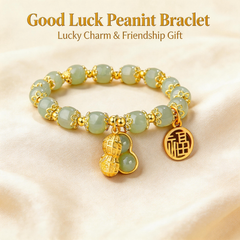
This is where the practical and the philosophical meet in a tangible way. In Traditional Chinese Metaphysics, gemstones are not decorative objects with vague positive energy. They are chosen based on their elemental correspondence and their specific interaction with your personal chart.
Someone whose BaZi chart is deficient in the Water element, for example, may benefit from stones associated with that element. Someone with a strong Fire chart may need grounding Earth-element stones to restore balance.
This is why function-specific jewelry — pieces chosen to attract luck, build wealth, foster love, or relieve anxiety — is grounded in something more precise than intention alone. The selection is informed by elemental logic, not aesthetics.
How the Disciplines Work Together in Practice
Imagine you are preparing to start a new business in 2026. A complete approach using Traditional Chinese Metaphysics might look like this:
- BaZi reading to understand your elemental profile, identify your favorable elements, and confirm whether this period in your life supports new ventures
- Auspicious date selection to choose the best date for registering the business, signing agreements, or launching publicly
- Feng Shui arrangement for your home office or business premises to ensure the space supports productivity and wealth flow
- Gemstone selection based on your chart's needs — perhaps a Citrine Bracelet for wealth energy or a Feng Shui Wealth Talisman Bracelet to reinforce the intention in your daily environment
None of these steps replaces sound planning or hard work. They are tools for alignment — ways of reducing energetic friction and increasing the likelihood that your efforts land well.
Where to Begin in 2026
The most common question is simply: where do I start?
Start with your BaZi chart. It is the foundation. Everything else — Feng Shui adjustments, date selection, gemstone choices — becomes more precise once you understand your elemental profile.
The free BaZi reading tool at WiAuGem Celestial Institute is a practical first step. It is not a replacement for a full consultation with a certified Grand Master, but it gives you a real starting point: your element, your animal sign, your lucky number, and a basic life path reading drawn from your birth details.
From there, if you want depth, paid consultations with certified Grand Masters are available via WhatsApp, Line, Telegram, and Facebook Messenger. These are not automated readings. They are personal sessions conducted by practitioners with decades of experience in BaZi interpretation, Feng Shui arrangement, and auspicious date selection.

FAQs
What is the Rosetta Stone of Chinese Metaphysics? The phrase describes the idea of a single framework that makes Traditional Chinese Metaphysics readable and applicable. That framework is the Three Realms model — Heaven (timing, BaZi), Earth (environment, Feng Shui), and Humanity (action, auspicious date selection) — all connected by the Five Elements.
What is BaZi and how does it work? BaZi, or the Four Pillars of Destiny, uses your birth date and time to construct an eight-character chart. Each character corresponds to one of the Five Elements. A practitioner reads the balance of elements in your chart to identify your strengths, challenges, and favorable timing across different life periods.
Is Feng Shui just about furniture placement? No. Feng Shui is a systematic analysis of how Qi — environmental energy — moves through a space and affects the people who live or work there. It involves orientation, directional mapping, elemental balance, and time-sensitive layers like Flying Stars. Furniture placement is one practical output of that analysis, not the analysis itself.
How is auspicious date selection different from a general calendar? A general calendar marks public holidays and cultural events. Auspicious date selection uses the elemental profile of a specific date and cross-references it with your personal BaZi chart to identify the best timing for a specific action — moving house, signing a contract, starting a business, or getting married. It is personalized, not generic.
Can gemstone jewelry actually support energy alignment? In Traditional Chinese Metaphysics, gemstones are selected based on their elemental correspondence and their interaction with your personal chart. A piece chosen to address a specific elemental deficiency or support a particular life goal carries more intentional weight than a randomly selected crystal. The selection is grounded in the same Five Elements framework that runs through BaZi and Feng Shui.
Do I need to understand all the disciplines before starting? No. Starting with a BaZi reading gives you the foundation. From there, a certified practitioner can guide you toward whichever other services or tools are most relevant to your current situation and goals.
What is the difference between Traditional Chinese Metaphysics and Western astrology? They are distinct systems with different origins, methodologies, and frameworks. Traditional Chinese Metaphysics uses the Five Elements, Heavenly Stems, Earthly Branches, and cyclical time periods rooted in Chinese cosmology. Western astrology uses planetary positions and zodiac signs rooted in Greco-Roman tradition. The two systems do not map onto each other directly.
Ancient wisdom does not require translation when it is explained clearly. The system has always been precise. What changes in 2026 is your access to practitioners and tools that can make it genuinely useful for your life.
Discover your destiny. Start with a free BaZi reading at wiaugem.com.